

There is an alley behind my house that I have been thinking about more seriously lately.
The most obvious problem is trash.
Sometimes it is small: paper plates, bags, loose household waste. Sometimes it is much larger. Furniture gets left there. Construction debris appears. There have been multiple occasions where it looked like someone had done renovation work somewhere else, driven into the alley at night, unloaded the unwanted material, and left.
Then something predictable seems to happen.
A large item sits there for a while. A chair becomes a mattress. A pile of construction material becomes a place where smaller trash accumulates. What begins as one act of dumping starts to change the character of the space around it.
At first, I thought this might be a straightforward design problem.
How might the alley be made cleaner? Better lit? More cared for? More pleasant? More obviously shared?
But the more I looked at it, the less confident I became that redesigning it was the right starting point.
The site
The alley runs between two residential rows in my neighborhood in Long Beach. Somerset Park sits at one end. A church and its parking lot sit at the other.
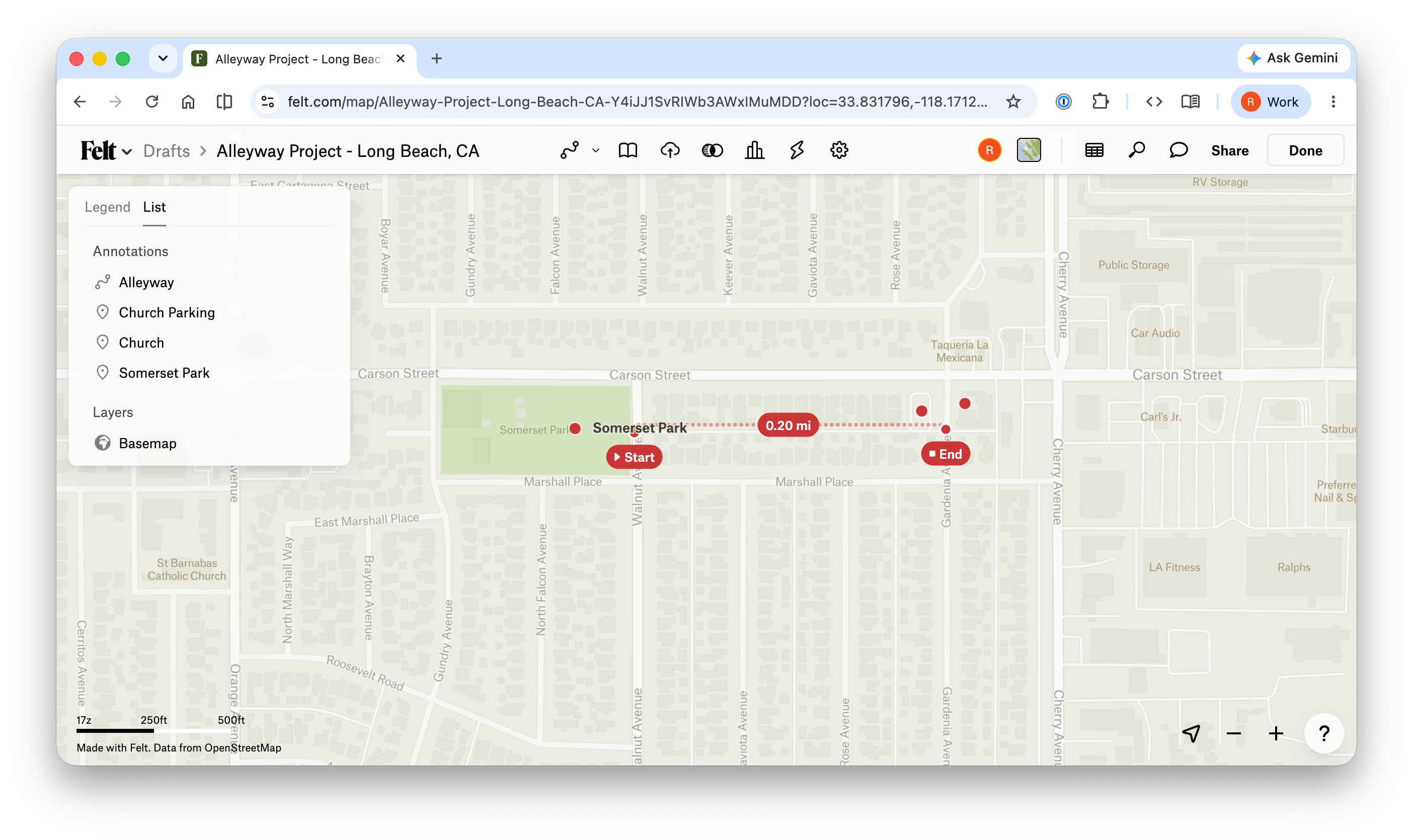
The alley sits between two residential rows, connecting Somerset Park on one end with a church parking lot on the other.
From above, it looks simple enough: a narrow corridor cutting through a block.
At ground level, it is more ambiguous.
There are garages. Apartment entrances. Parking spaces. Utility poles. Trash bins. Fences and walls. People drive through it. People walk through it. Some homes seem to relate to it primarily as a back entrance. For others, the alley appears to be much closer to an everyday residential edge.
That difference matters.
A pile of trash may technically affect the whole block, but it does not necessarily affect everyone equally.
Someone who drives through the alley, closes a garage door, and enters their home through a backyard may experience it very differently from someone whose apartment entrance or parking area opens directly onto it.
That made me start asking a different question.
Not:
How should this alley be redesigned?
But:
What is this alley, socially and spatially, to the people who use it?
What kind of place is an alley?
Is an alley infrastructure?
Is it shared space?
A service corridor?
A route home?
A backyard edge?
Leftover space?
Nobody’s space?
The physical space itself does not answer those questions.
Its meaning comes from how people use it, what they expect from it, what they tolerate there, what they feel responsible for, and what they believe other people are allowed to do there.
That is where I have started thinking more about the idea of social construction.
A place is not only its physical form. It is also the accumulation of decisions, norms, histories, patterns of use, and relationships that build up around it over time.
If that is true, then the dumping problem may not only be a waste-removal problem.
It may also be a clue.
What conditions make this alley feel like a place where unwanted material can be left with little consequence?
Why this alley?
Why here?
Why does a pile sometimes seem to attract more dumping?
Who notices?
Who reports it?
Who cleans it up?
Who waits for someone else to do it?
And who is forced to live beside it while that process plays out?
Stewardship
I keep coming back to the word stewardship, partly because I am still trying to understand what it means in a spatial context.
I think I used to hear stewardship and imagine maintenance.
Who sweeps the ground? Who removes the trash? Who fixes the fence?
But I am beginning to think stewardship is broader than that.
Who pays attention to the place?
Who feels some responsibility for what happens there?
Who has enough agency to change something when conditions deteriorate?
Who has the authority to act?
Who has the time, money, relationships, or institutional support to keep caring after the initial intervention is over?
And what kinds of informal stewardship already exist that I may not be seeing?
This is where the project starts to feel less like “designing an alley” and more like trying to understand a system.
Power enters the picture
Another question I have been thinking about is much less comfortable:
Who gets to define the problem?
I am the one who decided the alley was worth studying.
I am the one who is bothered by the trash.
I am the one imagining that there may be something to improve.
But what if other people who live around it do not want the alley “activated,” beautified, programmed, or redesigned?
What if they value it precisely because it is quiet, utilitarian, and out of the way?
What if my idea of improvement creates more traffic, more noise, more surveillance, more maintenance work, or less privacy for someone else?
The question cui bono? — who benefits? feels important here.
Who benefits from an intervention?
Who bears the costs?
Who gains more control?
Who loses some?
And who gets to decide whether the intervention happens at all?
An inclusive process does not guarantee an inclusive outcome. But ignoring those questions almost guarantees that important things will be missed.
Starting with what is already there
One idea I have been learning about in architecture class is community cultural wealth: the idea that communities already possess forms of knowledge, relationships, resilience, cultural knowledge, and informal capacity that are often ignored when outsiders define a place mainly by its deficiencies.
That changes the questions I want to ask.
Instead of:
What is missing here?
What should be added?
What should be fixed?
Maybe some of the earlier questions should be:
Who already knows this place deeply?
Who already watches what happens here?
Who knows when dumping tends to happen?
Who has relationships across the block?
Who has tried to solve this before?
What forms of care already exist?
And what would it look like to strengthen those rather than overwrite them?
Movement through the alley
I recorded the alley in both directions because a static image does not capture the sequence of the space.
From the church parking lot toward the park, the alley compresses quickly into a narrow residential and service corridor.
In the opposite direction, the sequence shifts. Entrances, garages, walls, parked cars, bins, and utility infrastructure appear in a different order. The experience is not symmetrical.
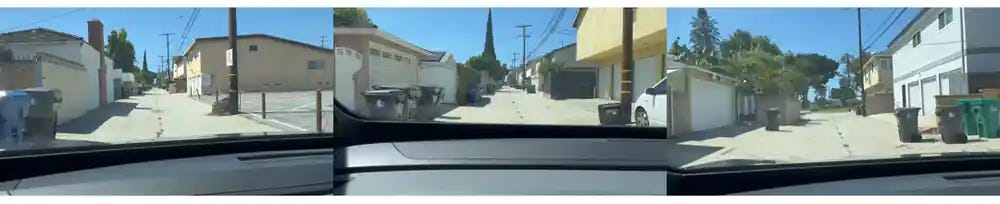
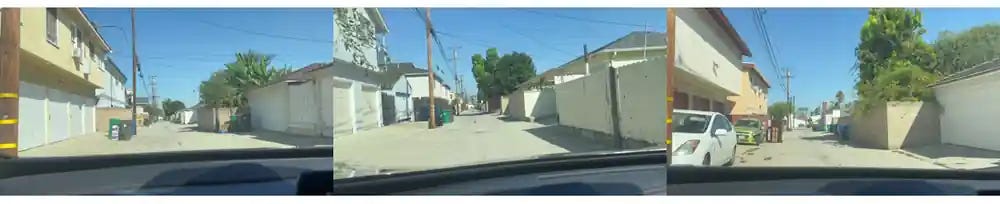
That movement raises another set of questions.
Where does the alley feel watched?
Where does it feel anonymous?
Where does it open up?
Where does it feel most like someone’s home?
Where does it feel most like leftover space?
Are there particular locations where dumping clusters?
And if so, what is spatially different about them?
I still do not know who all the stakeholders are
The residents bordering the alley are the most obvious stakeholders.
Beyond that, I am not sure yet.
The church may matter.
People using the park may matter.
Property owners and property managers may matter.
A city department may have responsibility for maintenance or dumping enforcement.
Waste services may matter.
Contractors or renovation crews may be part of the system.
Maybe some of those actors will turn out to be irrelevant.
That uncertainty is part of the next phase of the work.
Rather than inventing a stakeholder map from a distance, I want to discover who actually has:
exposure
knowledge
responsibility
authority
resources
influence
A few questions may be enough to start:
Who uses the alley?
Who is affected by what happens there?
Who has authority over it?
Who has the resources to change its conditions?
A working hypothesis
At the moment, my working hypothesis is:
Illegal dumping may be less a standalone behavior problem than a symptom of the alley’s ambiguous status: a space used by many people, experienced unevenly by residents, but with unclear stewardship and limited accountability for what happens there.
That is a hypothesis, not a conclusion.
I am actually hoping the next phase of the work proves parts of it wrong.
What comes next
Before proposing any physical intervention, I want to do a few simple things.
Talk to people who live along both sides of the alley.
Ask what they notice, what they value, what they dislike, and whether they think there is a problem at all.
Find out who in the city or elsewhere is responsible for alley maintenance and illegal dumping.
Start documenting dumping events over time: what appears, where, how long it remains, and whether one pile seems to generate another.
Map the stakeholders and the gaps in responsibility.
And eventually, perhaps, use small speculative scenarios or design fictions to explore second-order effects before proposing anything real.
What happens if the alley becomes more social?
What happens if it becomes more regulated?
What happens if it becomes more beautiful?
What happens if it becomes more visible?
Who gains?
Who loses?
What new problem appears?
Maybe the first design decision is not to design
That is probably the biggest shift in my thinking so far.
I started with a place and a problem and assumed the next step was to imagine a better version of the place.
Now I am less sure.
Maybe the work right now is simply to understand it.
To notice.
To ask better questions.
To understand how the place is already functioning, who holds power, what forms of care already exist, and what people actually want.
The goal is not to arrive at a predetermined redesign.
It is to understand the place well enough to know whether, where, and how design can actually help.
And to remain open to the possibility that the most responsible intervention may not be a new physical object at all.